
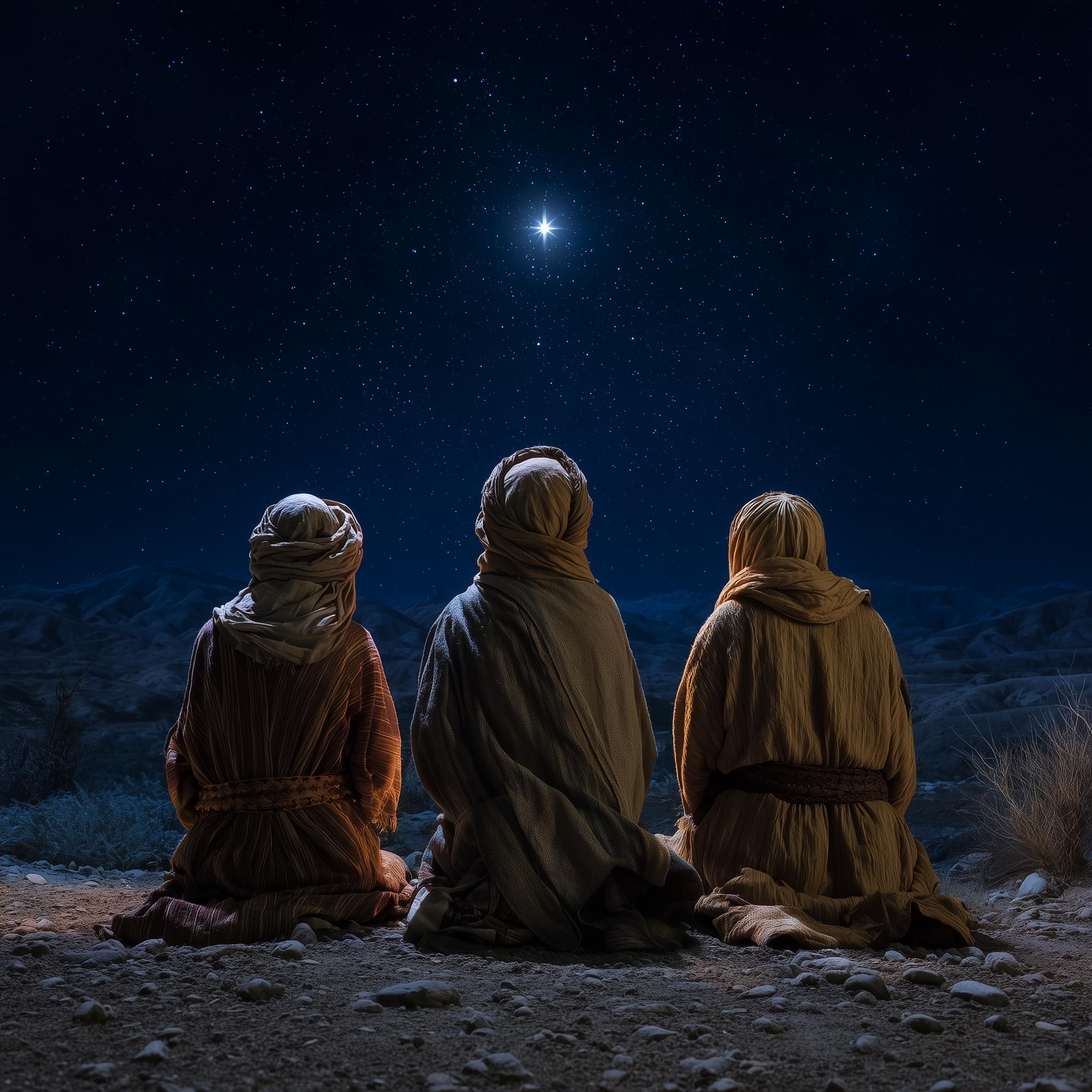
The Christmas story is often told with grandeur—angels singing, kings arriving, gifts fit for royalty.
Yet when we look closely at the Magi, we find something far quieter and far more instructive. They were not the powerful rulers we often imagine. They were scholars, observers of the heavens, men accustomed to knowledge rather than command. And when revelation finally came to them, it did not arrive through status or strength—it came through humility. The Magi knelt.
The Journey Was Not the Revelation
The Magi traveled far. Their journey required endurance, resources, and courage. But Scripture does not present the journey itself as the moment of revelation. The star guided them, yes—but guidance is not the same as encounter. Revelation did not come when they arrived in Jerusalem, the city of power. It did not come through political authority or religious prestige. In fact, when the Magi encountered pride embodied in Herod’s court, clarity diminished rather than increased. The true revelation came later—when they bowed low.
God Does Not Reveal Himself to Pride
Pride demands control. It seeks certainty, recognition, and dominance. But God is not revealed through mastery. He is revealed through surrender. The Magi’s posture tells us everything. These men, learned and respected in their own cultures, knelt before a child they could not control, a truth they could not manipulate, and a kingdom they could not leverage. They brought gifts, not demands.
They offered worship, not explanation.
They bowed, and in bowing, they saw clearly.
The Star Shines for the Humble
The Star of Bethlehem is often depicted as dramatic—blazing, radiant, overpowering. But its true power lies not in spectacle, but in precision. It appeared only to those watching. Only to those who were willing to follow without full understanding. The star did not announce itself to the proud. It revealed itself to the attentive. This is a pattern repeated throughout Scripture: God reveals Himself not where pride builds monuments, but where humility makes space.
From the Magi to Us
The Magi’s story is not meant to stay in the past. It is an invitation. Today, we live in a world that rewards visibility, confidence, and self-promotion. Even faith can be tempted toward performance. Yet the message of the Magi quietly confronts us: God still reveals Himself where pride is absent. Not always in noise.
Not always in certainty.
But often in stillness, kneeling, and surrender.
A Posture That Endures
In the end, the Magi leave the story quietly. They return home by another way—changed, but not celebrated. Their humility does not seek recognition. It simply responds to revelation. That is the enduring invitation of Christmas.
To kneel.
To make space.
To look up. And to trust that when pride steps aside, God is already present.
For more on this topic, see: